
Regulatory Updates Newsletter: May 2026
Welcome to the May 2026 Ed. of our Regulatory Newsletter.
Regulators worldwide remained focused on managing emerging technology risks and safeguarding stability amid ongoing global uncertainties. Key themes include harnessing artificial intelligence for fraud detection, strengthening supervisory cooperation, and maintaining robust macroprudential settings. Notable developments this month range from Singapore’s industry-wide AI fraud pilot to Australia’s prudential reforms and global warnings on new financial vulnerabilities.
Dive in for official updates and actionable insights from leading jurisdictions.
MAS Collaborates with Banks on AI-Driven Scam Detection

MAS announced a collaborative “proof-of-value” initiative with five banks, the Government Technology Agency, and the Singapore Police to use AI/ML for pre-emptive scam detection.
Banks will securely pool transaction data (with strict privacy safeguards) to train AI models that flag high-risk payments and accounts. Early identification of suspicious patterns aims to enable timely interventions and reduce customer losses from financial fraud.
MAS provides a controlled data-sharing environment and cryptographic protections (hashed account numbers, strict access controls) to ensure confidentiality.
Implications
This cross-industry AI pilot underscores regulators’ push to leverage advanced analytics against financial crime.
Participating banks should prepare for new data governance processes and close coordination with law enforcement. A successful proof-of-value could lead MAS to expand AI use cases (beyond scams) and set precedents for similar initiatives in the region.
SEC Proposes Semiannual Reporting Option

The U.S. SEC proposed sweeping rule and form amendments to give public companies the option of filing semiannual reports instead of quarterly reports to meet their interim reporting obligations under federal securities laws.
Under the proposal, companies subject to Exchange Act Section 13(a) or 15(d) could elect to file semiannual reports on a new Form 10-S in lieu of three quarterly reports on Form 10-Q.
This proposal, a key part of Chairman Paul S. Atkins' "Make IPOs Great Again" agenda, is designed to encourage companies to go public and remain public by reducing the regulatory burdens of listing. The proposed Form 10-S would require the same narrative and financial disclosures as Form 10-Q, but would cover a six-month fiscal period. Financial statements in the form must be prepared under U.S. GAAP and reviewed by an independent auditor, though they are not required to be audited.
Additionally, the proposal would amend Regulation S-X to align periodic and registration statement requirements with this semiannual cadence, ensuring that financial statements do not become prematurely "stale" under the new framework. The public comment period remains open until July 6, 2026.
Implications
Shifting to a semiannual schedule lowers ongoing compliance, legal, and auditing overheads, allowing corporate management to reallocate capital and time from short-term quarterly reporting cycles toward long-term strategic growth.
While the proposal maintains core investor protections, the reduction in reporting frequency may widen information gaps for market participants, potentially increasing reliance on voluntary current disclosures such as Form 8-K.
Choosing a semiannual timeline does not automatically change a company’s voluntary earnings release or call schedules, which remain at the sole discretion of the firm.
FSB Warns of Growth in “Private Credit” Risks

The FSB published a report highlighting rapid growth in the $1.5–2 trillion private credit market and its potential systemic risks. Private credit vehicles (non-bank lending funds) have proliferated, often linked to banks and insurers through credit lines and partnerships.
The FSB notes key vulnerabilities: heavy leverage and borrower credit concerns (often unrated, higher-risk loans), valuation opacity, and concentration in sectors like tech and healthcare.
It urges authorities to “close data gaps” and harmonise definitions to better monitor these exposures.
Implications
Supervisors worldwide are encouraged to step up monitoring of non-bank finance and data collection on private funds.
Financial firms involved in private credit should expect greater scrutiny and possible new reporting requirements as regulators seek to detect emerging stress points.
Risk managers must account for indirect linkages (e.g. a bank’s contingent
exposures) in their stress tests.
UK Regulators Push Ahead with Tokenisation Plans

The FCA and the Bank of England published a joint Call for Input outlining a shared strategic vision to support the safe adoption of tokenisation and distributed ledger technology (DLT) across UK wholesale financial markets. This coordinated push is designed to give financial institutions the clarity they need to move from experimental technology pilots into active, live production.
To support the digital asset ecosystem, the Bank of England launched a consultation proposing the phased expansion of its Real-Time Gross Settlement (RT2) service and the CHAPS high-value payment system toward near-continuous 24/7 settlement.
The proposed roadmap schedules an early-morning extension to 01:30 on weekdays starting in September 2027, with subsequent steps introducing Sunday and holiday operations no earlier than 2029.
In tandem, the Prudential Regulation Authority (PRA) distributed "Dear CEO" letters providing updated guidance on the prudential treatment of tokenised asset exposures, stablecoins, and innovations in digital deposits. These parallel developments are reinforced by active experimentation within the UK's Digital Securities Sandbox (DSS), which is currently operating with 16 firms executing live transactions of tokenised equities, bonds, and money market instruments.
Implications
Establishing a 24/7 central bank money settlement leg enables true, risk-free Delivery-versus-Payment (DvP) and atomic settlement, eliminating counterparty credit exposures and reducing capital lock-ups.
Financial institutions must review their internal liquidity models and treasury functions to prepare for rapid, continuous cash management across extended operating hours and weekends.
The PRA's updated guidelines require firms to implement robust risk management frameworks that directly address the specific operational and systemic risks of holding or backing digital assets.
ECB and RBI Sign Cooperation MoU

The ECB and the Reserve Bank of India announced a Memorandum of Understanding to enhance cross-border banking cooperation.
The MoU formalises information-sharing and technical cooperation on banking supervision, regulation and financial stability. Key areas include exchange of-
supervisory views (e.g. on large Indian banks operating in the euro area),
joint training, and
coordination on global prudential standards.
The agreement reflects deepening ties as Indian banks expand internationally and EU banks have growing India exposure.
Implications
European and Indian financial institutions can expect more seamless regulatory engagement and faster resolution of cross-border issues.
This MoU may smooth approvals for Indian banks seeking European branches (and vice versa) by clarifying each side’s expectations. It also signals ongoing dialogue as India moves towards Basel-aligned rules.
South Africa Extends Capital Flow Reform Consultation
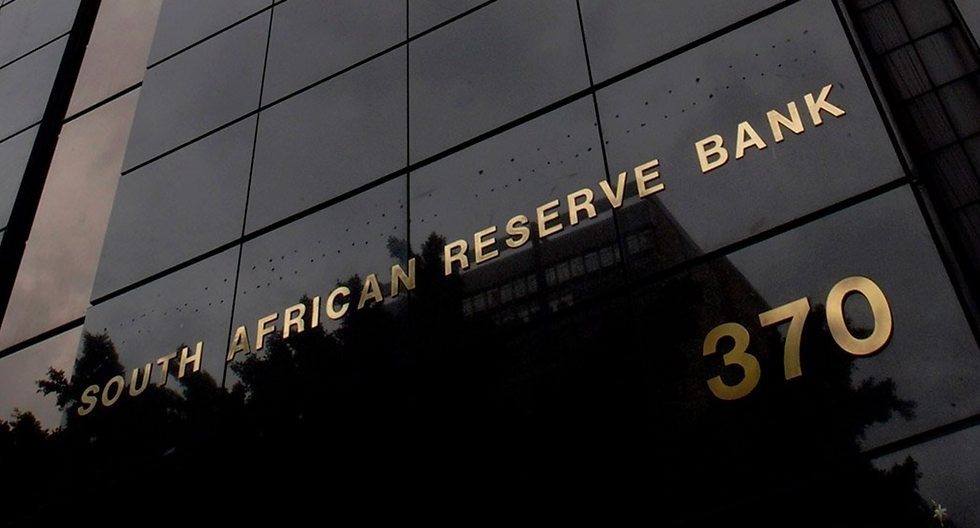
The National Treasury of South Africa and the South African Reserve Bank extended the public comment period for the draft Capital Flow Management Regulations, 2026, pushing the submission deadline to June 30, 2026. The proposed regulations, originally published on April 17, 2026, are set to completely replace the historic and highly restrictive Exchange Control Regulations of 1961.
This modernized framework transitions South Africa toward a "positive bias" approach to managing cross-border capital flows, focusing on transaction reporting, the surveillance of high-risk transactions, and combating illicit financial flows rather than requiring administrative pre-approvals for standard transactions.
To address widespread public and industry concerns regarding the future treatment of digital assets, the authorities clarified that the regulations do not seek to criminalise the possession of crypto assets or apply measures retrospectively.
To complement the rules, a detailed draft manual outlining a cross-border crypto asset framework is scheduled for release soon, which will explicitly define which crypto transactions constitute cross-border activity and specify the reporting responsibilities of authorised service providers.
Implications
Authorised crypto asset service providers operating in South Africa must prepare to establish sophisticated transaction monitoring and reporting systems to comply with the upcoming cross-border manual.
The shift away from archaic exchange controls aligns South Africa with international best practice, reducing barriers to foreign investment while maintaining targeted macroprudential protections against capital flight.
Financial institutions must integrate these updated capital flow rules into their existing risk-based anti-money laundering and counter-terrorist financing surveillance programs.
Basel Committee Endorses ICT and Crypto Work

The Basel Committee met amid heightened geopolitical uncertainty (e.g. Middle East conflict).
Members noted the global banking system remains well-capitalised but warned of “second-order effects” (inflation shocks, supply disruptions) that could test resilience.
The Committee approved a forthcoming report on ICT risk management practices (addressing non-malicious cyber incidents) and advanced reviews of cryptoasset prudential treatment and liquidity standards. It also noted developments in AI- while AI tools may aid cyber defense, their malicious use could increase the pace and scale of cyber threats.
Implications
Banks and supervisors worldwide should prepare for new global guidance on operational resilience (ICT risk) and crypto exposures.
The Committee’s continued focus on private credit also complements the FSB’s May report. Firms should monitor the Basel Committee’s forthcoming publications for updated expectations in these areas.
APRA Formalises Three-Tier Prudential Framework

APRA announced it will embed a new three-tier framework in its banking prudential rules.
Under the reforms, banks with assets above A$300 billion (the four major banks and Macquarie) will form a new “Most Significant Financial Institutions” (MSFI) tier. The “Significant Financial Institution” (SFI) threshold rises from A$20bn to A$30bn, while smaller banks remain “non-SFIs.”
APRA will grant any bank moving up to a higher tier a 12-month transition for compliance, and generally allow more lead time for smaller banks to implement new rules.
Implications
This change increases clarity in regulatory obligations by size. Large banks (MSFIs) will continue facing the strictest standards; medium banks (SFI) have higher asset floors; and smaller banks get proportionately lighter compliance timelines.
Firms should review where they fit in this tiering scheme for upcoming standards (e.g. future capital or liquidity rules) and plan for 12-month transition windows where applicable.
APRA Holds Macroprudential Settings Steady
APRA’s board kept all current housing-sector macroprudential caps unchanged after its latest review.
The 3% serviceability buffer, 1% countercyclical capital buffer, and the high-debt-to-income (DTI) lending cap (20% of new loans at DTI ≥6x) will remain in place. APRA cited a “high degree of uncertainty” and noted that while Australian households are very indebted, loan performance remains strong and high-risk lending is contained.
Housing credit growth has moderated recently, and banks are well-buffered for shocks.
Implications
Lenders should plan for continuing conservative underwriting constraints on mortgage lending. Maintaining these buffers signals APRA’s caution over recent interest rate rises and geopolitical risk. Borrowers at the edge of affordability may find fewer ultra-high-leverage mortgage options.
Meanwhile, healthy capital levels suggest banks have resilience to absorb downturns if needed.
Summary of Other Notable Updates
Regulator | Jurisdiction | Update | Source |
Securities and Exchange Board of India | India | Announced the discontinuation of the Investor Risk Reduction Access (IRRA) platform, effective May 7, 2026. The IRRA acted as an intermediary risk-check system, and SEBI terminated it to streamline processes for stockbrokers. | |
Monetary Authority of Singapore | Singapore | Imposed a S$300,000 composition penalty on Padang Trust Singapore Pte. Ltd. on May 25, 2026, for breaches of AML/CFT requirements. The breaches included failing to inquire into unusual transactions and delay in submitting Suspicious Transaction Reports. | |
Federal Reserve Board | United States | Requested public comment on May 20, 2026, on a proposal to establish a zero-interest, specialized "payment account." Tailored to support financial innovation, the account is designed for the clearing and settlement needs of legally eligible non-traditional institutions, but excludes access to the discount window or daylight overdrafts. | |
ADGM Financial Services Regulatory Authority | United Arab Emirates | Finalised significant enhancements to its Anti-Money Laundering and Sanctions Rulebook (AML Framework) on May 21, 2026. The updates align the framework with UAE federal AML laws and international FATF standards, focusing on senior management accountability and digital fund/virtual asset transfer "travel rule" compliance. | |
Prudential Regulation Authority | United Kingdom | Announced plans on May 18, 2026, to consult on major reforms to the bank ring-fencing regime. The upcoming consultation will propose allowing banks more flexibility in sharing operational services (such as IT, back-office, and data-processing) across the ring-fence to reduce compliance costs. | |
Australian Securities and Investments Commission | Australia | Outlined financial reporting, audit, and sustainability focus areas for the FY 2026-27 on May 18, 2026. Surveillance will target areas requiring significant management judgment (such as asset impairment and revenue recognition) and monitor compliance with the mandatory climate reporting framework. |
Stay informed with our regulatory updates and join us next month for the latest developments in risk management and compliance!
For any feedback or requests for coverage in future issues (e.g., additional countries or topics), please contact us at info@riskinfo.ai. We hope you found this newsletter insightful.
Best regards,
The RiskInfo.AI Team


Comments